
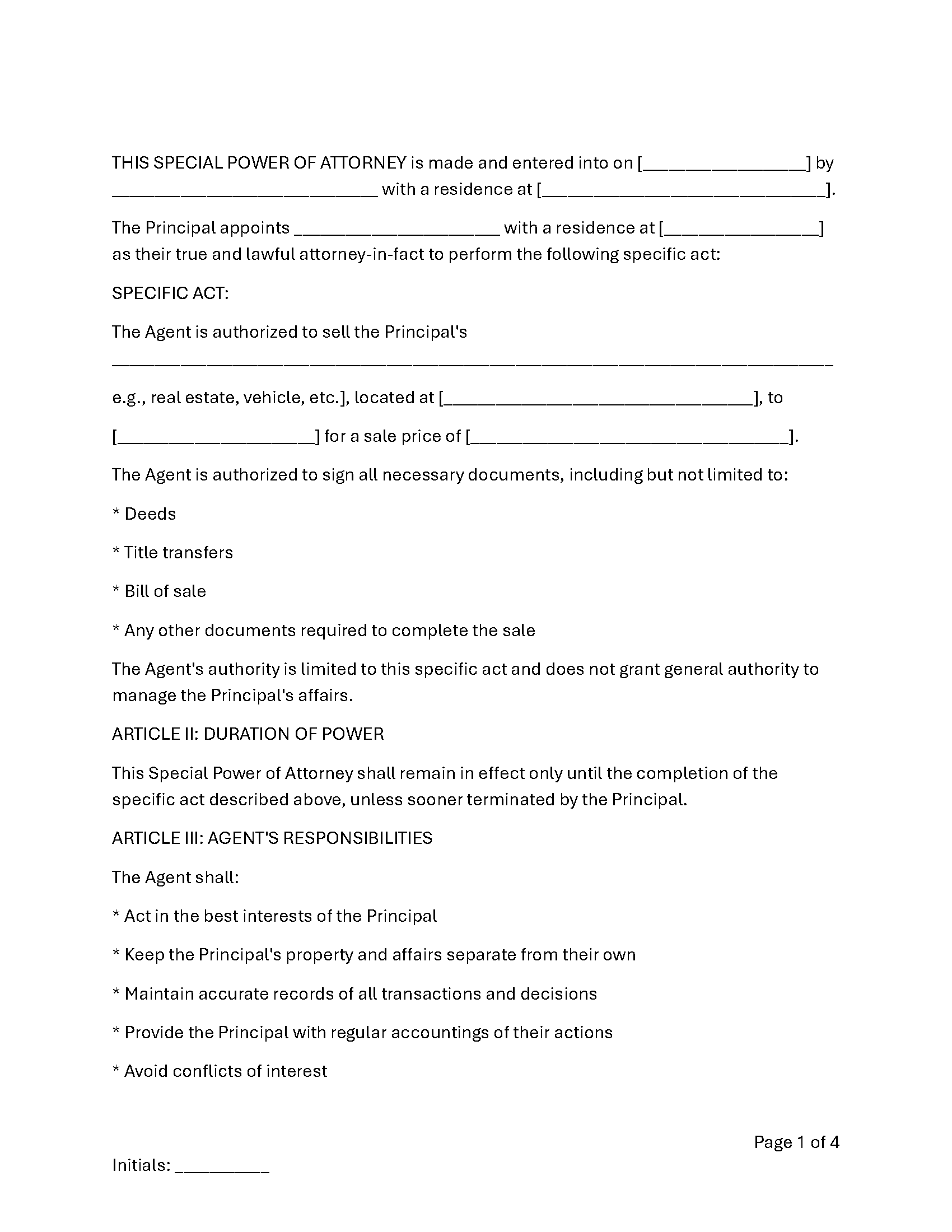
Special Power of Attorney Document
Special Power of Attorney Document
$3.99
NON-ATTORNEY DISCLOSURE*
* Our services are limited to preparing and notarizing documents and providing general information about the document preparation process. We do not provide legal advice, and our services should not be considered a substitute for the advice of a licensed attorney.
A special power of attorney (POA) is a legal document that allows one person (the principal) to grant another person (the agent or attorney-in-fact) the authority to act on their behalf in specific matters or for a particular period. This document is particularly useful when the principal cannot be present to make decisions or take action in relation to a specific task or situation. It is essential to understand that a special power of attorney grants limited powers, which distinguishes it from a general power of attorney that permits broader authority over various aspects of the principal’s life. ### Key Elements of a Special Power of Attorney 1. **Principal and Agent**: The principal must clearly identify themselves, and they must also name the agent who will act on their behalf. It’s vital to choose someone trustworthy, as they will have the authority to make decisions that impact the principal's interests. 2. **Specific Powers Granted**: The document must specify the powers conferred upon the agent. These can include, but are not limited to: - Managing real estate transactions, such as buying or selling property. - Handling financial matters, such as banking transactions or investments. - Making health care decisions in situations where the principal is incapacitated. - Representing the principal in legal matters. - Filing taxes and managing other bureaucratic necessities. 3. **Duration**: The special power of attorney can be effective immediately or can be set to become effective in the future, such as upon the principal’s incapacitation. It can also specify an expiration date. 4. **Revocation**: The principal has the right to revoke the special power of attorney at any time, as long as they are of sound mind. This revocation should be communicated to the agent and, if necessary, recorded officially. 5. **Signature and Notarization**: Typically, the principal must sign the document in front of a notary public to validate it. Some jurisdictions may also require witnesses. ### Uses of Special Power of Attorney A special power of attorney can be useful in various situations, including: - **Medical Situations**: If the principal undergoes a procedure requiring anesthesia or is otherwise incapacitated, a special POA can allow the agent to make medical decisions on their behalf. - **Real Estate Transactions**: If the principal is unable to be present for a transaction, they can appoint someone to sign documents and complete the sale. - **Financial Management**: The agent can be given authority to manage financial matters, especially if the principal is traveling abroad or cannot manage their finances due to illness. ### Considerations When Creating a Special Power of Attorney - **Legal Requirements**: Laws governing special power of attorney documents vary by state or country, so it is crucial to understand local regulations. Consulting an attorney will ensure compliance and that the document meets all necessary legal standards. - **Choosing the Right Agent**: The agent should be someone who understands the principal's values, interests, and wishes. This person will be making significant decisions and should be capable of acting in the principal's best interest. - **Clarifying Powers**: The powers should be clearly described to avoid misunderstandings or misinterpretations. Ambiguity in the language used can lead to disputes or unintended consequences. ### Conclusion A special power of attorney is a powerful tool that allows individuals to designate someone they trust to make decisions on their behalf in specific circumstances. Whether it's for medical, financial, or legal matters, it provides peace of mind knowing that trusted individuals will handle affairs in alignment with the principal's wishes. Crafting a well-considered, legally sound special power of attorney is crucial, and seeking legal advice is often a prudent step in the process.