
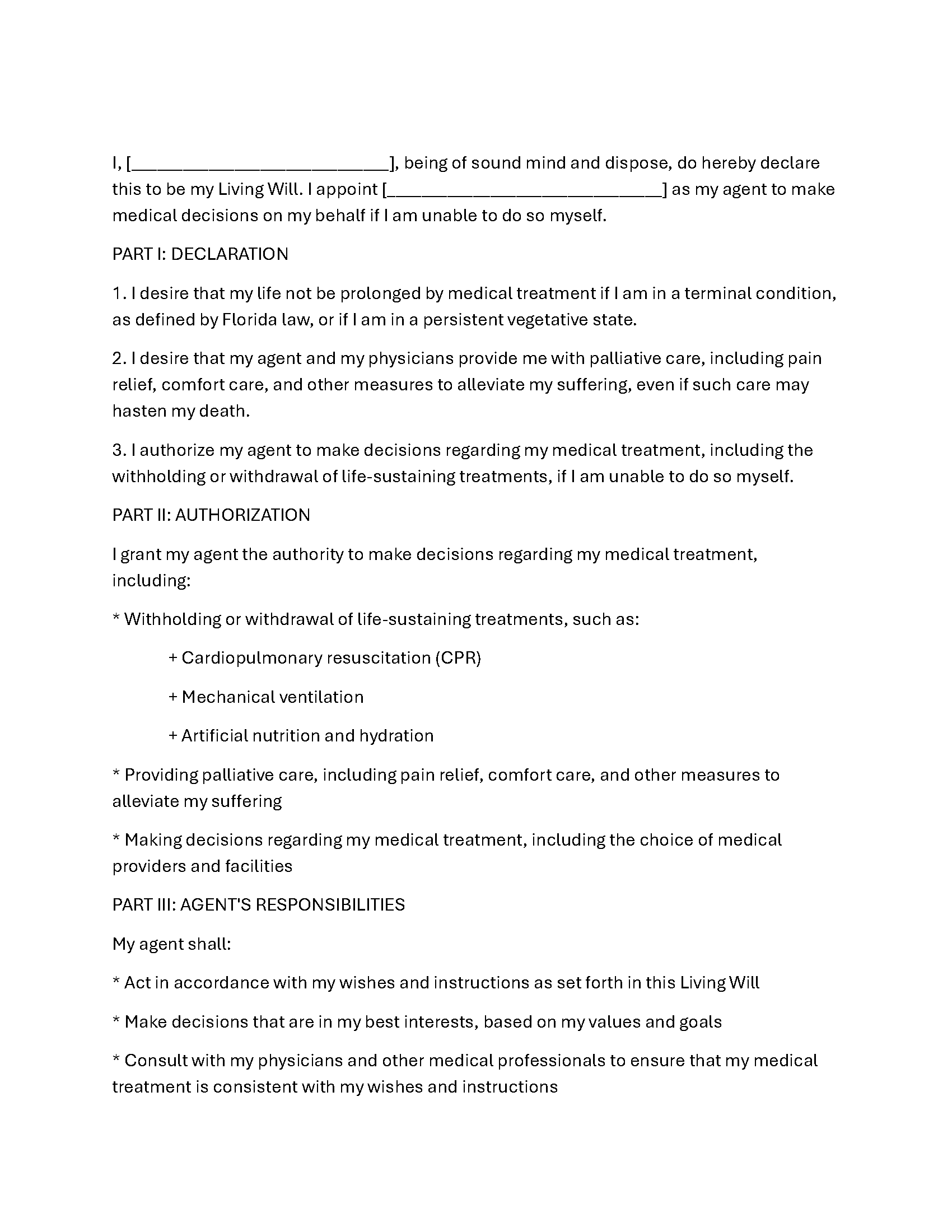
Living Will Healthcare Directive
Legal document for medical decision-making
$3.99
NON-ATTORNEY DISCLOSURE*
* Our services are limited to preparing, notarizing documents and providing general information about the document preparation process. We do not provide legal advice, and our services should not be considered a substitute for the advice of a licensed attorney.
A living will be an essential legal document that allows individuals to outline their preferences for medical treatment in the event that they become unable to communicate their wishes due to illness or incapacitation. By making these crucial decisions ahead of time, a living will serve both to guide healthcare providers in administering treatment and to alleviate potential burdens on family members during emotionally challenging situations. **Understanding a Living Will** A living will specifically addresses end-of-life care and can include directives regarding life-sustaining treatments, resuscitation efforts, and palliative care options. It is vital for individuals to clearly articulate their desires related to interventions such as mechanical ventilation, feeding tubes, and do-not-resuscitate (DNR) orders. This legally binding document ensures that medical choices align with personal values and beliefs, reflecting the individual's wishes in situations where they might lack the capacity to express them. **Key Components of a Living Will** Typically, a living will include the following components: 1. **Statement of Intent**: A clear declaration that the document serves as a living will and outlines the individual's healthcare wishes. 2. **Medical Conditions**: Descriptions of the specific medical conditions or situations under which certain treatments should or should not be administered. 3. **Treatment Preferences**: Explicit instructions regarding types of treatments an individual wishes to accept or refuse, such as resuscitation, organ donation, or comfort care. 4. **Signature and Witnesses**: The document must be signed by the individual and may require witnesses or notarization, depending on state laws. **Importance of a Living Will** Having a living will is essential for several reasons: - **Clarity of Wishes**: It ensures that healthcare providers understand the patient's wishes, removing ambiguity in high-stress situations. - **Reduction of Family Conflict**: A living will can help prevent disagreements among family members about medical care, as dissenting opinions are minimized when there are clear directives. - **Peace of Mind**: Composing a living will can provide emotional relief for individuals and their loved ones, knowing that medical choices will reflect the patient’s personal values. **Legal Considerations** Laws governing living wills vary by state, so it is crucial to follow specific regulations regarding their creation and execution. Some states allow for advance healthcare directives to serve as both a living will and a durable power of attorney for health care. Consulting with an attorney or a knowledgeable healthcare professional can aid in ensuring that the living will meets all legal requirements. **Updating Your Living Will** A living will should not be considered a one-time document. Life circumstances, personal beliefs, and medical advancements can change over time. It is advisable to review and update the living will periodically or whenever significant life events occur, such as marriage, divorce, the birth of a child, or diagnosis of a chronic illness. **Communicating Your Wishes** While a living will is a written document, the importance of discussing medical wishes with family members cannot be overstated. Having open conversations regarding treatment preferences can foster understanding and support among loved ones. Providing copies of the living will to family, healthcare proxies, and primary care physicians further ensures that these wishes are known and honored. **Final Thoughts** Creating a living will is a proactive step toward ensuring that one's healthcare preferences are respected, especially in critical and often challenging circumstances. By taking the time to articulate personal values and wishes, individuals can empower themselves and their families, facilitating peace of mind and clarity in times of need.